A clear boundary between fruit preparation and juice extraction
Prepared arils are the feed to this juice line. They may come from a preparation area alongside the line or from an existing aril supply. Whole-fruit projects also need reception, washing, inspection, fruit opening and removal of peel and membrane before that feed reaches the press.
The brush washer and inspection conveyor provide real upstream equipment options. Opening and aril preparation are a separate interface in the layout: access, collection vessels, waste removal and the supply of clean arils must all fit the juice section. A washer or screened fruit pulper does not perform this entire task.
Control the feed bed before increasing pressing load
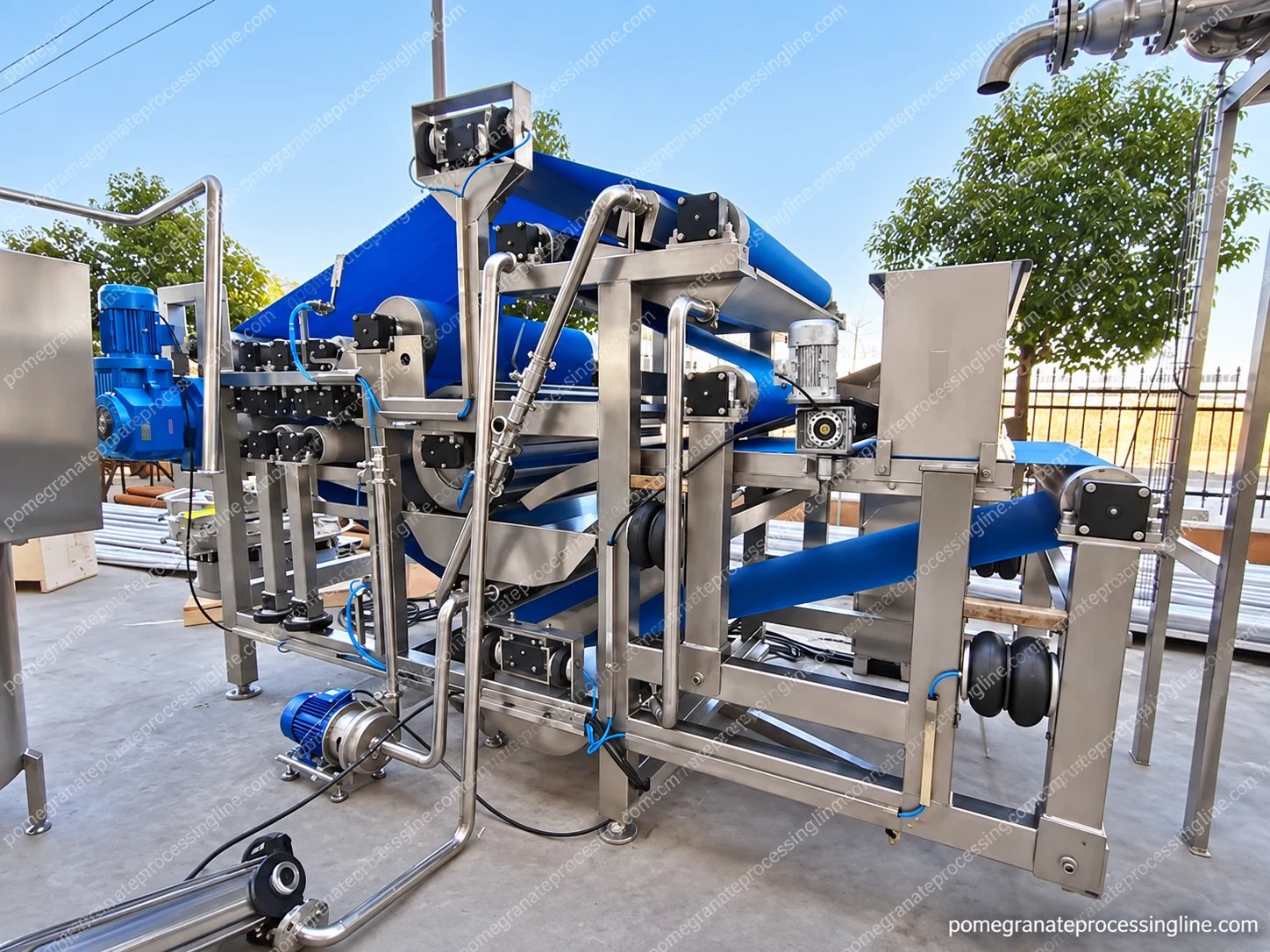
Arils enter the belt press as a steady, distributed feed. The moving filter belt carries material through roller pressing zones, allowing juice to leave the solid material while the wet residue continues towards discharge. Feed distribution, belt condition and the selected pressing settings determine how the material travels through the machine.
A juice collection and transfer arrangement carries extracted liquid to the next stage. Matching that transfer to the press avoids standing juice and repeated stop-start operation. Seed fragments, residue moisture, juice composition and sensory quality are assessed together during product trials; more mechanical pressure is not automatically the better operating point.
Choose the separation route that belongs to the product
A cloudy juice and a clear ingredient concentrate have different separation duties. The product brief determines the suspended material to retain and the material to remove. A disc clarifier can reduce sedimentable solids; filter-aid filtration or tubular ultrafiltration provides other clarification routes with different operating and cleaning requirements.
These machines are options within a process design, not a compulsory sequence. Where pectin treatment is needed, a process tank provides a controlled batch step before the chosen separation equipment. Treatment conditions and the filter response are established with the actual juice rather than a fixed enzyme recipe.
Join treatment and filling through one controlled product path
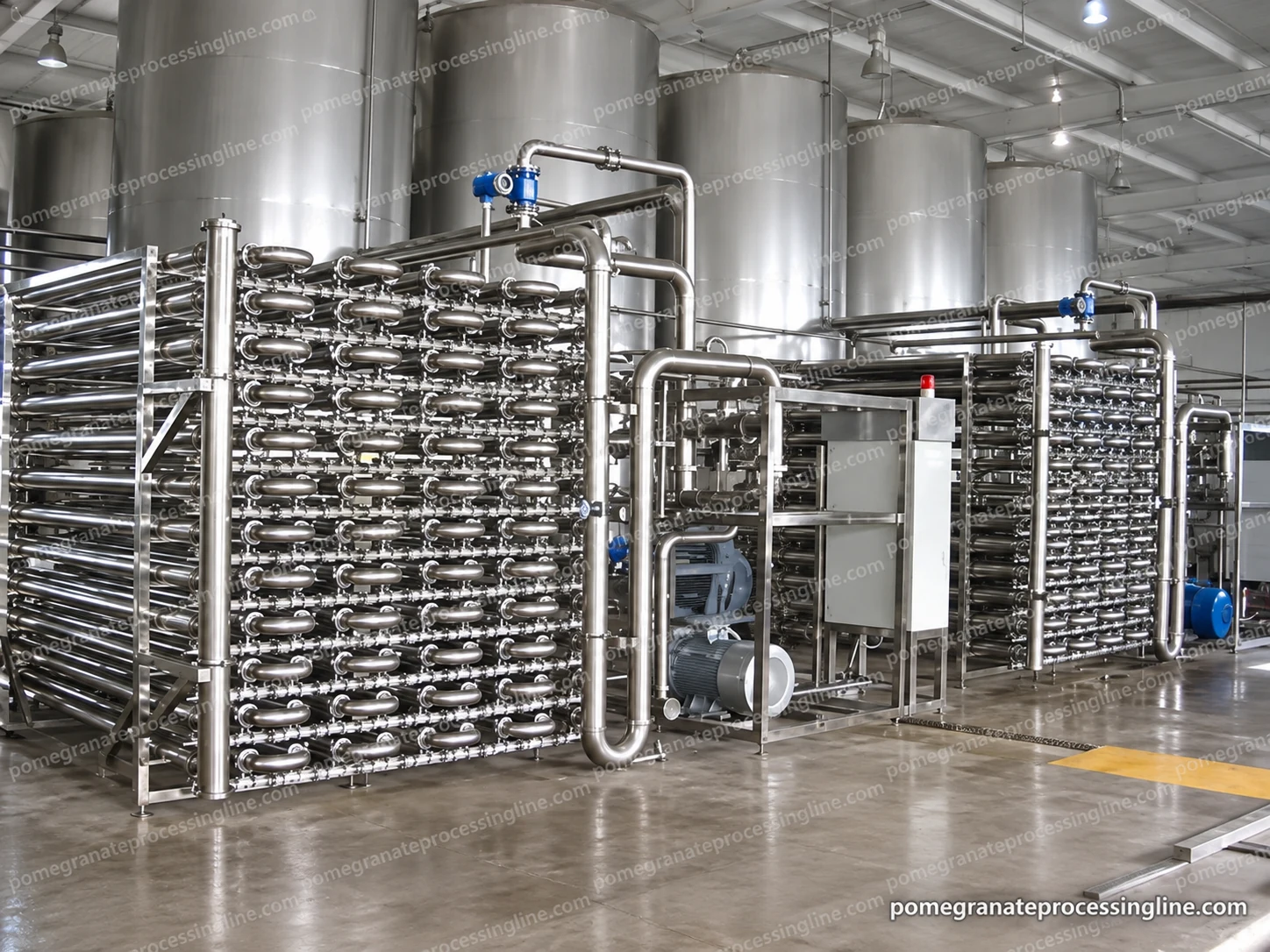
The tubular thermal system provides the heating, holding and cooling stages for a specified juice process. Feed flow, product condition and the downstream filling temperature form part of its configuration. Start-up, temperature deviation and a filler stop need defined routing so product is not sent forward merely because a pump is running.
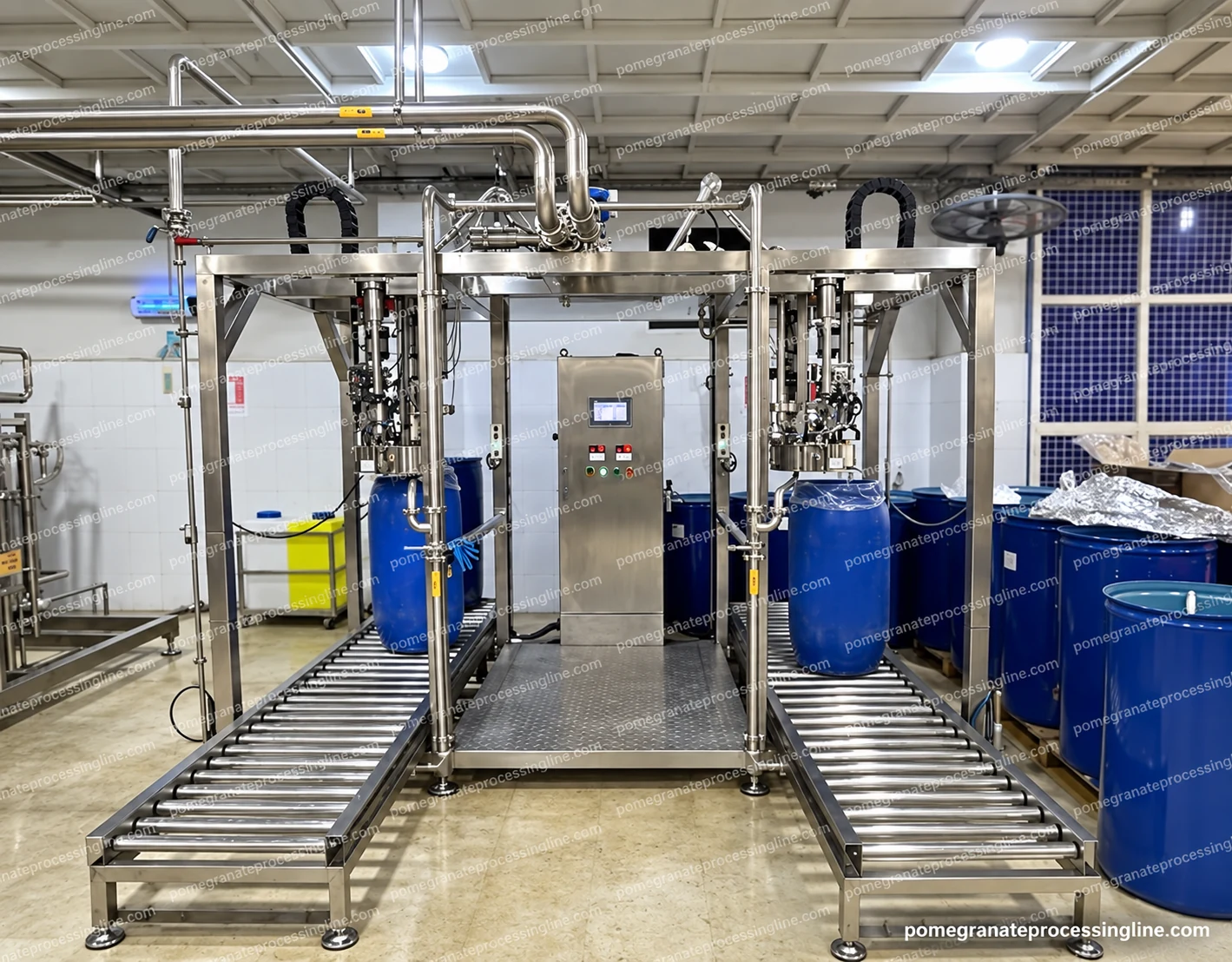
For aseptic bulk production, the treated juice feeds an aseptic bag filler through the agreed sterile interface. The filling head, bag fitment, metering method and container movement are selected as a package. The pictured two-position filling arrangement provides separate drum tracks; its useful output depends on filling and bag-change time as well as liquid flow.
Size the line at its real operating boundaries
Whole-fruit intake, accepted aril feed and juice flow are separate quantities. The press is matched to the aril supply, while tanks, clarification equipment and thermal treatment are matched to the resulting liquid duty. Buffer capacity accommodates realistic interruptions without becoming long, uncontrolled storage.
The equipment layout includes access around the belts, a separate residue route, drainage, service clearances and the utility connection points. Open preparation and press components need physical cleaning and inspection; the CIP station serves the closed circuits that have been designed for circulation and return.
Evaluate saleable juice over a complete run
A representative run follows incoming aril condition, feed rate, extracted juice, wet residue and retained product over the same measurement period. Samples at the press outlet and after separation show what each operation changes. Colour, suspended solids and sensory results give context to the measured recovery.
Include start-up, planned stops, bag changes and cleaning in the acceptance scope. A short peak at the press is not the sustained output of the assembled line. The quotation can cover the complete downstream sequence or the individual machines needed to connect to equipment already installed.
Further detail
Questions about this equipment and process
Can the line receive whole pomegranates?
The juice section receives prepared arils. Whole-fruit intake can be planned with washing and inspection, followed by a separate opening and aril-preparation stage before pressing. That upstream stage and its waste handling are defined explicitly in the supply scope.
Can we keep our existing press or filler?
Yes, the process can be scoped around existing equipment. The retained machine’s actual feed, output, hygiene and control interfaces determine the connecting tank, pump, treatment and filling arrangements.