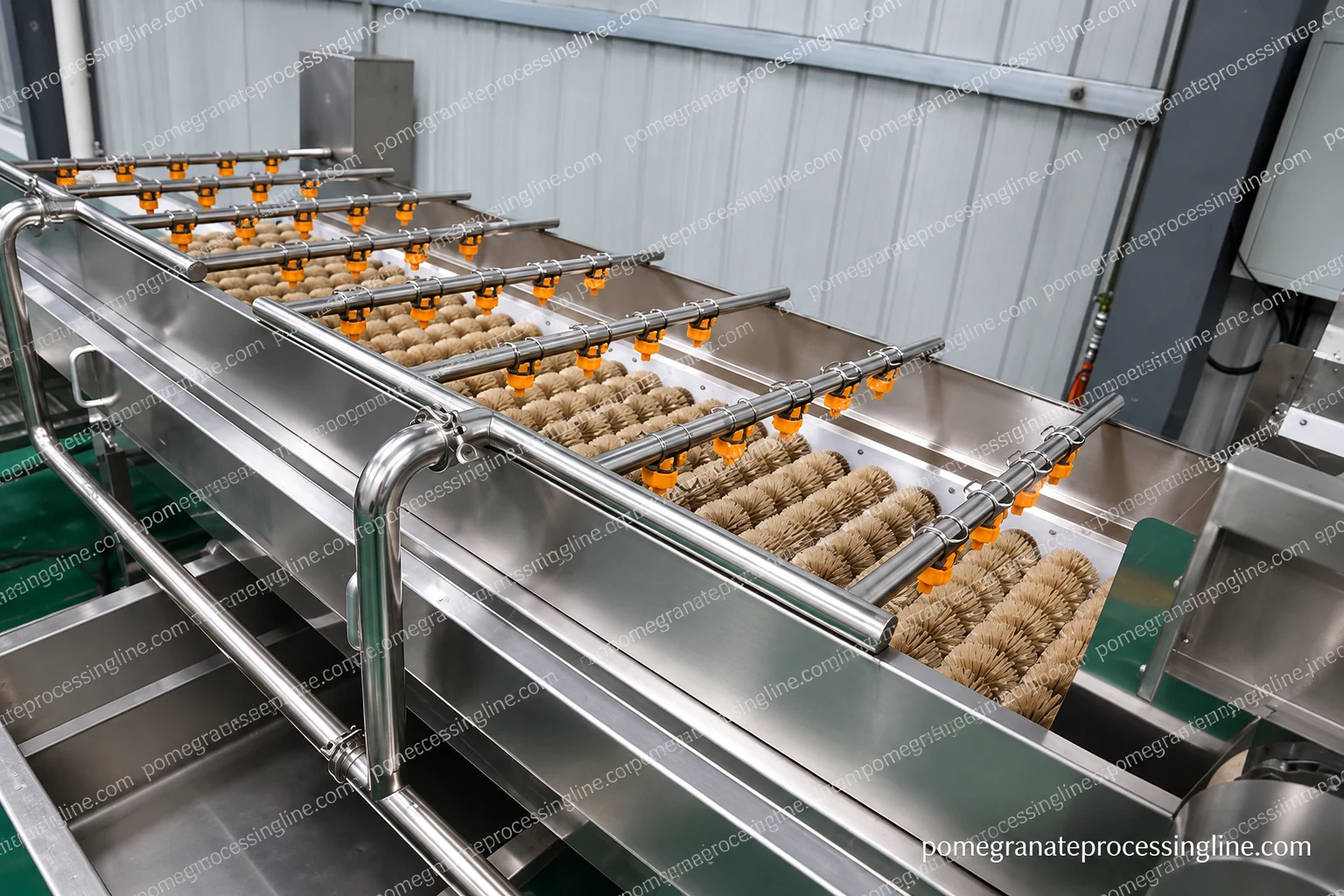
Clean and inspect fruit while it is still whole
The brush washer combines contact with rotating brush rolls and water from overhead spray bars. Fruit movement, spray coverage and debris removal need to suit the fruit’s surface and condition. Cleaning the outside is a separate duty from opening the fruit or separating arils.
A manual inspection belt presents fruit within reach of operators and provides an exit for damaged fruit and foreign material. Access for inspection, rejected-fruit containers and safe belt cleaning should be arranged before the fruit enters the opening area.
Treat opening and aril separation as their own operation
Opening exposes the arils for separation from the peel and membranes. A preparation area can supply the juice section from manual workstations or from an existing aril-preparation process. Its output is collected arils, while peel and membrane leave through a distinct waste route.
The layout must allow preparation to proceed at a steady rate without placing open product beneath dirty whole-fruit handling. Collection depth, transfers and any retained liquid influence how arils arrive at the press. A screened pulper used elsewhere in fruit processing should not be treated as an equivalent opening operation.
Manage the condition of the accepted aril feed
Inspect the accepted stream for peel pieces, membrane carryover, damaged fruit material and unwanted foreign objects. The same lot can contain loose arils and free juice; their collection and measurement need a consistent basis so losses are not hidden in a drain or counted twice.
Freshly prepared, chilled and previously frozen arils can present different proportions of free liquid and intact tissue. Storage and thawing arrangements therefore affect press feeding and buffering. Any thaw liquid intended for the product must stay within the controlled product-handling route.
Compare carryover and recovery together
Aril recovery alone does not describe preparation quality. The composition of the accepted feed and the amount of liquid lost alongside rejected material also matter. Peel and membrane contact can change the juice’s phenolic profile, so the best preparation setting is judged with the resulting product as well as the collected mass.
Cleaning workstations, containers and transfer surfaces requires direct access and inspection. Removable product-contact parts need an appropriate washing arrangement; the downstream CIP station cannot clean an open preparation room simply by circulating through juice pipework.