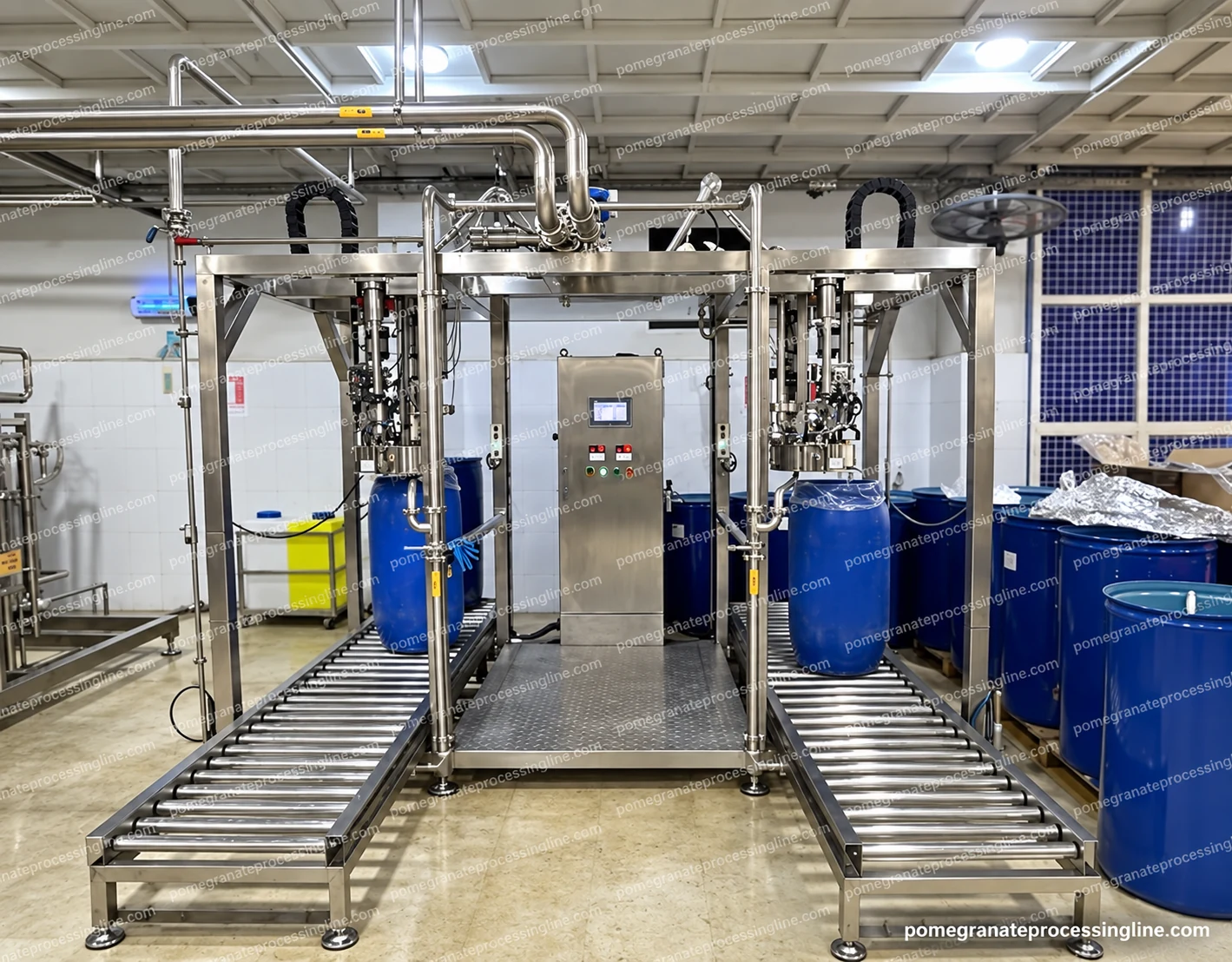
Start with the bulk package
Identify the intended bag format, fitment and handling arrangement. Specify which package types the filling interface must support and how operators load and remove them.
An aseptic bag filler is one element in a coordinated product-treatment and filling system; its name alone does not validate an aseptic process.
Keep treatment and filling conditions together
Agree the incoming liquid condition, transfer path, control states and interruption response. The thermal and filling boundaries should appear on the same process drawing.
For concentrate, include the actual liquid behaviour in the pump and filling selection rather than using a juice-flow assumption.
Separate closed circuits from open-equipment cleaning
Map CIP supply, return, drains and isolated branches. Specify which vessels, lines and treatment sections belong in each circuit and how the cleaning result is verified.
The press belts and accessible preparation equipment still need their own physical cleaning and inspection procedures. A downstream CIP station does not replace that work.