Connect preparation, pressing and liquid transfer
Elevator discharge height, inspection access and the opening-area arrangement set the upstream mechanical interfaces. Prepared arils then need a suitable controlled transfer to the press. The receiving point and drop should accommodate the product without relying on a whole-fruit conveyor specification.
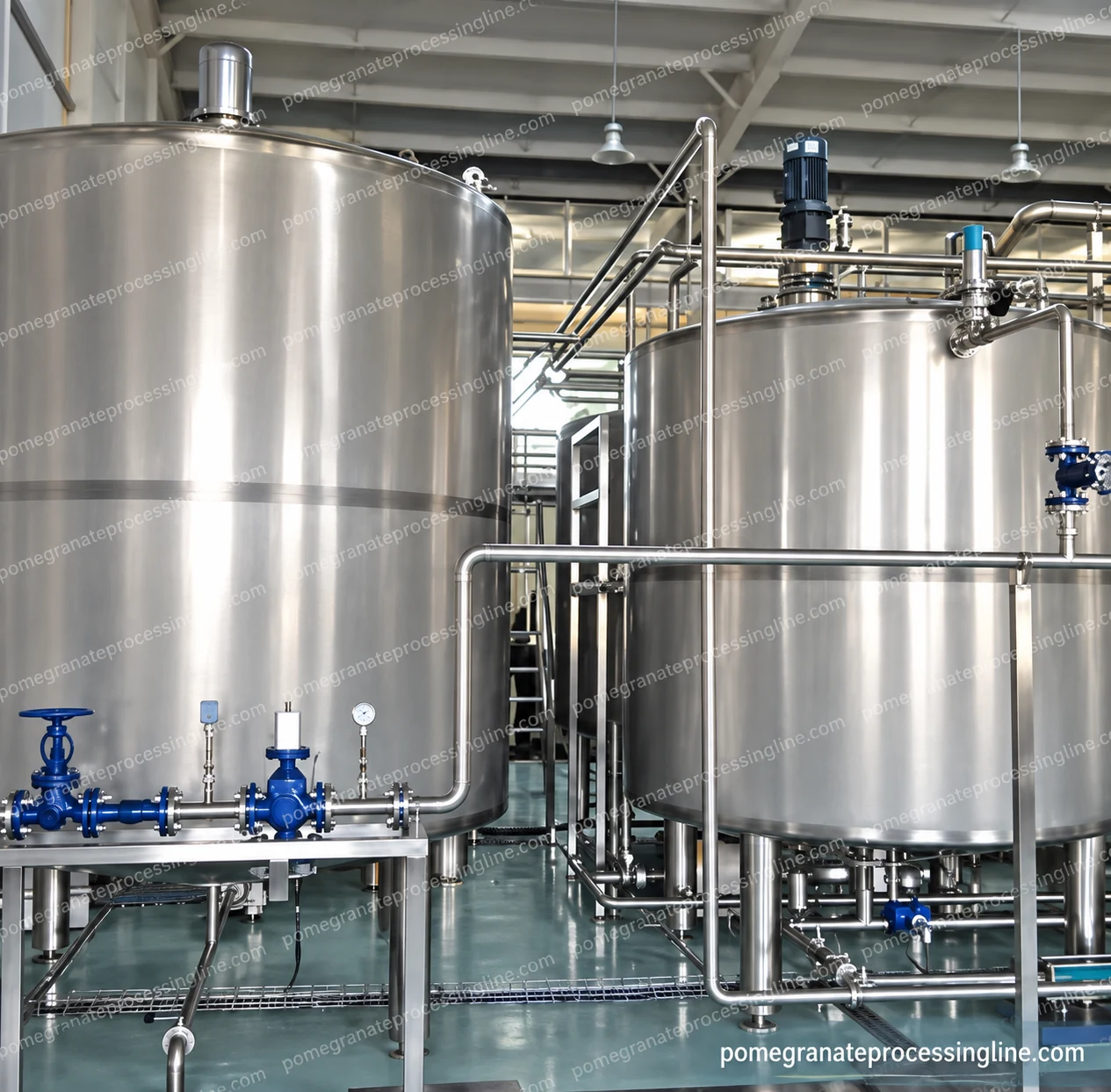
At the press outlet, collection and pump duty follow the liquid flow and permitted holding condition. The destination tank’s inlet, working levels and outlet arrangement must support the next stage. Service access remains clear around the belt, residue exit and pump assemblies.
Schedule utility demand by operating state
Utility connection schedules should state supply conditions at the equipment boundary. A plant with adequate daily water or energy consumption may still lack the peak flow needed when operations overlap.
| System | Production requirement | Other demand to include |
|---|---|---|
| Washing and preparation | Sprays, fruit movement and collection | Drainage, debris removal and end-of-run cleaning |
| Evaporation | Heating energy, cooling and vacuum | Start-up, condensate handling and cleaning |
| Thermal treatment | Heating, cooling and controlled product flow | Start-up circulation and return paths |
| Aseptic filling | Product feed, filling-head services and container handling | Sterile preparation, bag changes and line stops |
| CIP | Supply and return flow for the selected circuit | Heating, chemical preparation and recovery or discharge |
Define what happens when one machine stops
Level signals, feed permissives and downstream availability coordinate production. When the press pauses, a buffer can support the following liquid stage for a defined period. When the filler stops, the upstream thermal and transfer equipment must follow the specified hold, return or shutdown sequence.
The control description distinguishes production, start-up, cleaning and service states. Valve positions, pump operation and routing are checked against those states. Signal exchange with retained equipment belongs in the integration scope rather than being left to the final installation day.
Design for access and verify the assembled duty
A practical layout provides separate movement for incoming fruit, preparation waste and filled containers. It includes safe working space, floor drainage, machine removal routes, instrument access and room to open or service product-contact assemblies.
Equipment capacity is checked at each material boundary, with the slower operation and planned interruptions carried into the line-output estimate. Installation checks then verify the actual connections, controls and cleaning paths before product acceptance is measured under the agreed operating conditions.