Start with the condition of the incoming fruit
Compare fruit size, surface contamination, damaged fruit and the way batches arrive. A bulk receiving hopper and a manually loaded inspection conveyor create different feeding and operator-access requirements.
Specify the whole-fruit feed rate separately from the accepted-aril rate. Preparation rejects and fruit fractions change the material available to the press.
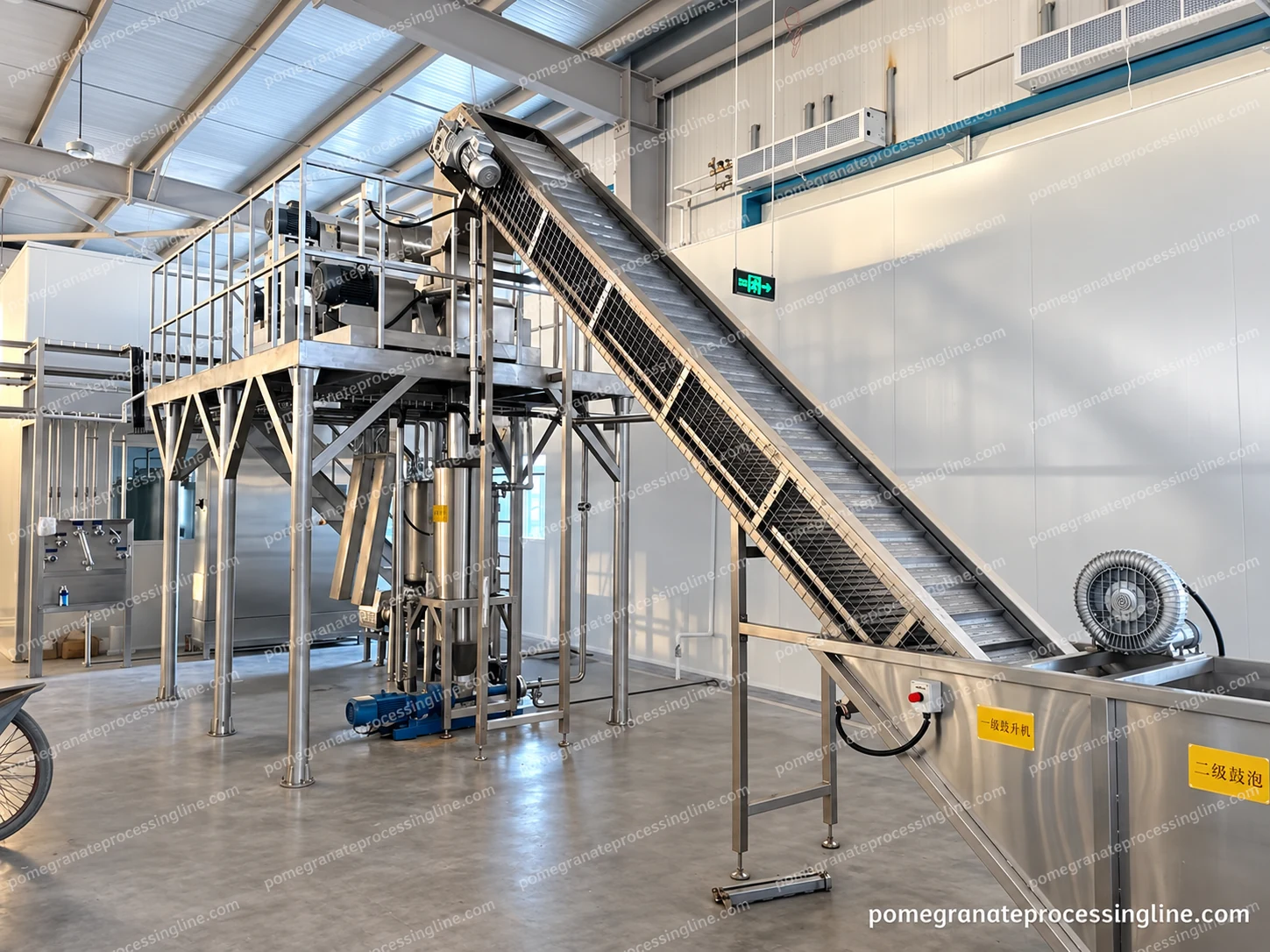
Choose a transfer, washing and inspection arrangement
The elevator connects intake and discharge heights. The brush-and-spray washer cleans the fruit exterior. The inspection conveyor presents fruit for manual selection; it does not imply an automatic optical sorting system.
- Agree each discharge height and avoid uncontrolled drops.
- Define rinse-water supply, solids removal and drainage.
- Allow operators to reach both sides of the inspection position.
Keep the aril-separation boundary explicit
Whole fruit is not the normal prepared-aril feed basis of the belt press. Identify how opening, peel and membrane removal, aril collection and rejected material are handled.
Before selecting downstream capacity, assess the condition and consistency of the accepted arils, including preparation carryover. Specify a separate opening and aril-separation duty when that stage is part of the project.