Begin at the incoming juice connection
The feed tank separates deliveries or upstream extraction from continuous evaporator operation. Incoming concentration, suspended solids, temperature and storage history affect the next operation. An existing extraction line can feed this section directly through a suitably controlled buffer; a stored ingredient supply has its own receiving and transfer requirements.
Clarification belongs ahead of concentration when required by the finished product or evaporator duty. Sedimentable solids, pectin-related behaviour and filterability are assessed before selecting a disc separator, filter-aid unit or ultrafiltration. Concentrating a juice does not replace those separation functions.
Match evaporation to the changing liquid
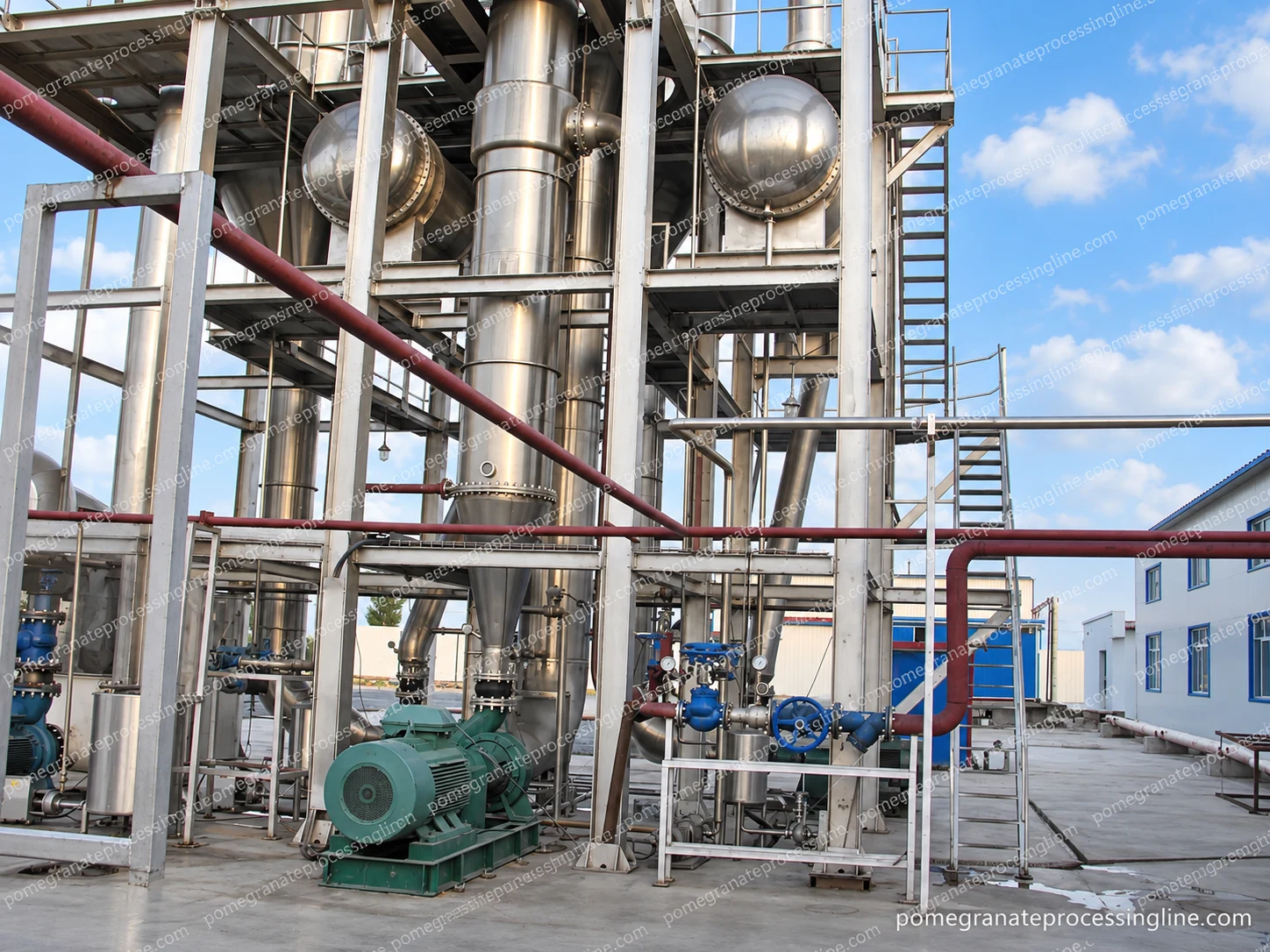
Falling-film equipment distributes a suitable liquid as a film over heated surfaces. Forced circulation uses a pump to move product through the heating circuit and is considered where the developing viscosity or deposit behaviour calls for another circulation pattern. Selection includes the condition at the concentrated end, not only the easy-flowing incoming juice.
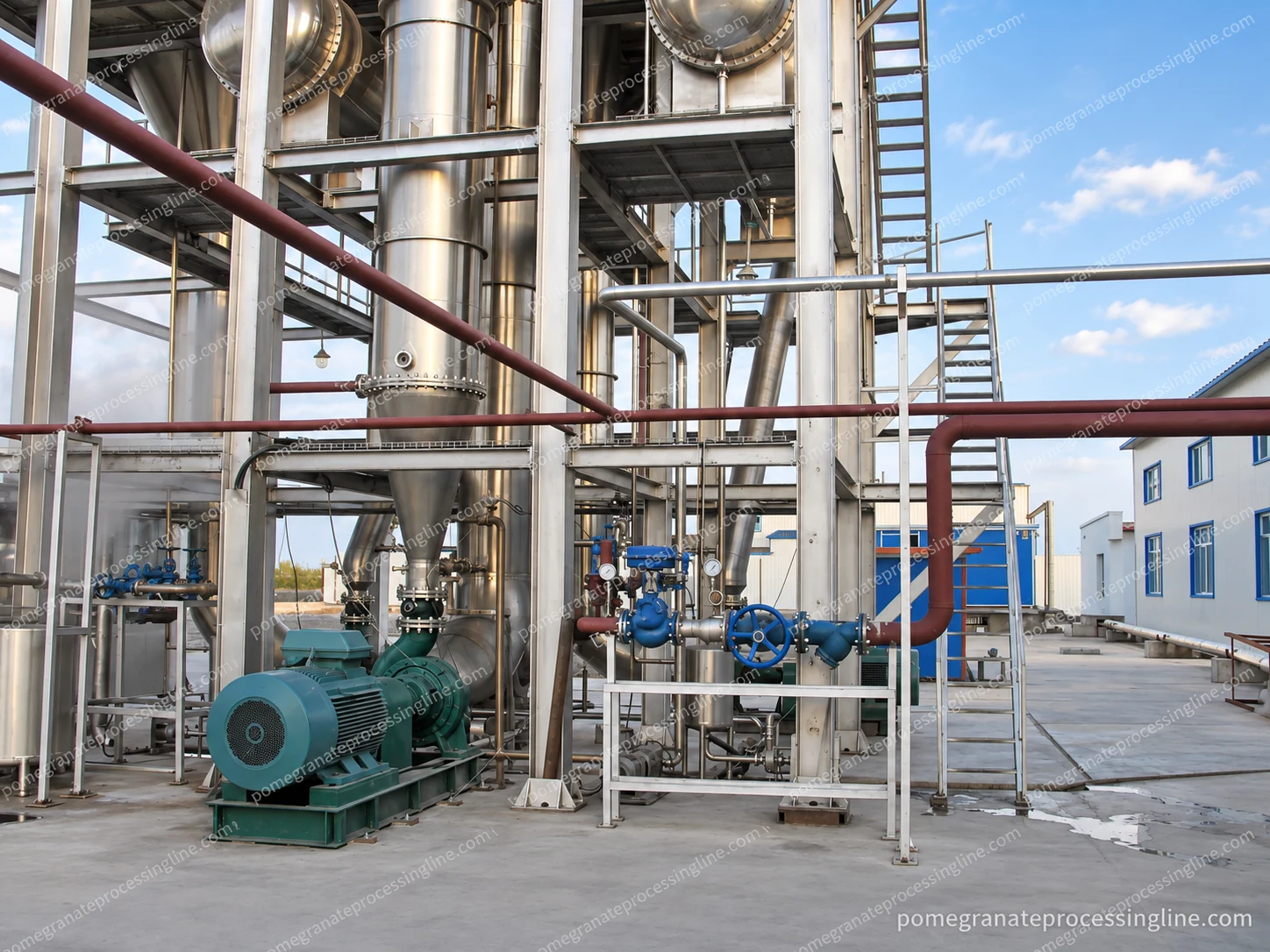
The evaporation system includes the heating arrangement, vapour separation, vacuum equipment, product transfer and controls needed for the selected duty. Single-effect and multi-effect configurations use heat differently; the useful choice depends on the production campaign, utility conditions and the full operating cost.
Manage oxygen and heat as part of the route
Closed transfers, controlled tank residence and a steady liquid feed help avoid unnecessary air pickup. A vacuum deaeration unit can be incorporated where oxygen removal is part of the process requirement. Its operating point is considered alongside volatile loss and foaming, rather than selected solely for the lowest possible pressure.
Colour and flavour are followed across clarification, evaporation and final heat treatment. Sampling at several locations makes it possible to distinguish a feed-quality change from an evaporation or holding problem. The product evaluation includes reconstituted concentrate where that is how the customer will use the ingredient.
Deliver the concentrate to the selected package
Concentrated juice can differ substantially from incoming juice in viscosity and pumping behaviour. The thermal system, connecting pipework and filling valves therefore follow the final product condition. An aseptic filler receives product through a prepared sterile path and meters it into the selected pre-sterilized bag.
The package specification includes the bag and fitment, nominal fill, supported container and movement after filling. When two filling positions are used, the controls coordinate filling with bag and drum handling. Product preservation follows the validated process, package integrity and storage specification as a whole.
Separate feed capacity from water-removal duty
Evaporator selection starts with a mass balance between feed, concentrate and removed water. A feed specification in litres per hour needs the juice density at the stated condition before it becomes a mass flow. Soluble-solids readings and their measurement temperature also need a consistent reporting method.
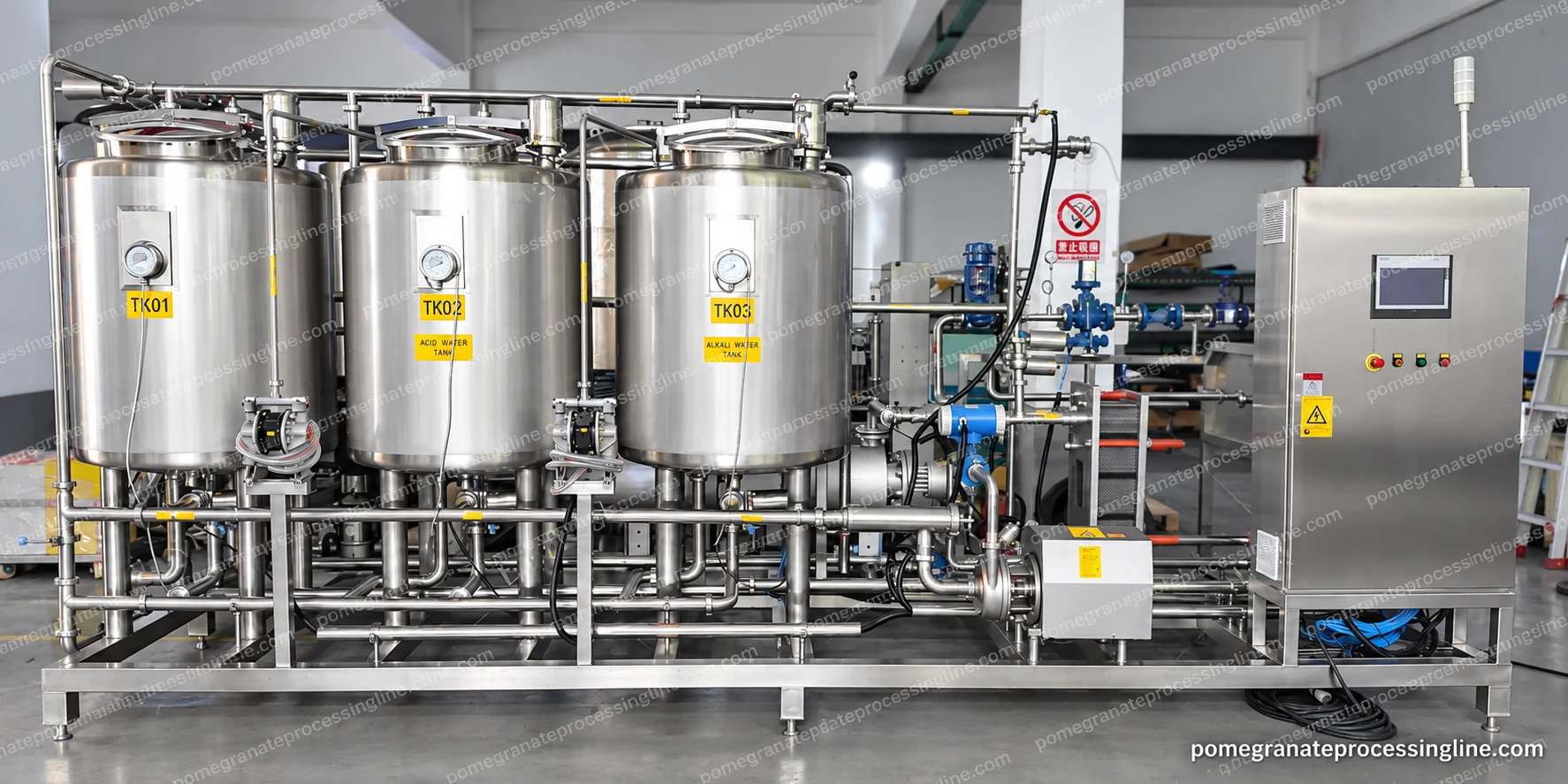
Steam, cooling water, condensate discharge, vacuum demand and cleaning are reviewed over production and changeover. A suitable installation leaves room for inspection, pumps and valve access, and for servicing the heating and separation components. The CIP circuits include the product path and the returns required to clean it effectively.
Buy the concentration section at the right scale
The purchase can be an evaporator connected to existing liquid handling or an integrated concentration, treatment and filling section. The equipment schedule identifies supplied machines, connecting services and retained equipment so installation has a clear starting point.
Acceptance should record sustained feed and concentrate output, water removal, product quality and cleaning recovery under the same stated conditions. An evaporation rate alone does not describe how much packaged ingredient the plant produces during a working shift.
Further detail
Questions about this equipment and process
Do we need to buy fruit reception and pressing equipment?
No. A concentration section can start with existing juice. Its receiving, clarification and buffer arrangement is designed around the condition and continuity of that supply.
Does a concentrate specification define the evaporator size?
It is one input. Required feed rate, incoming composition, final composition, operating hours, fouling behaviour and utility conditions are also needed to establish the evaporation and transfer duties.