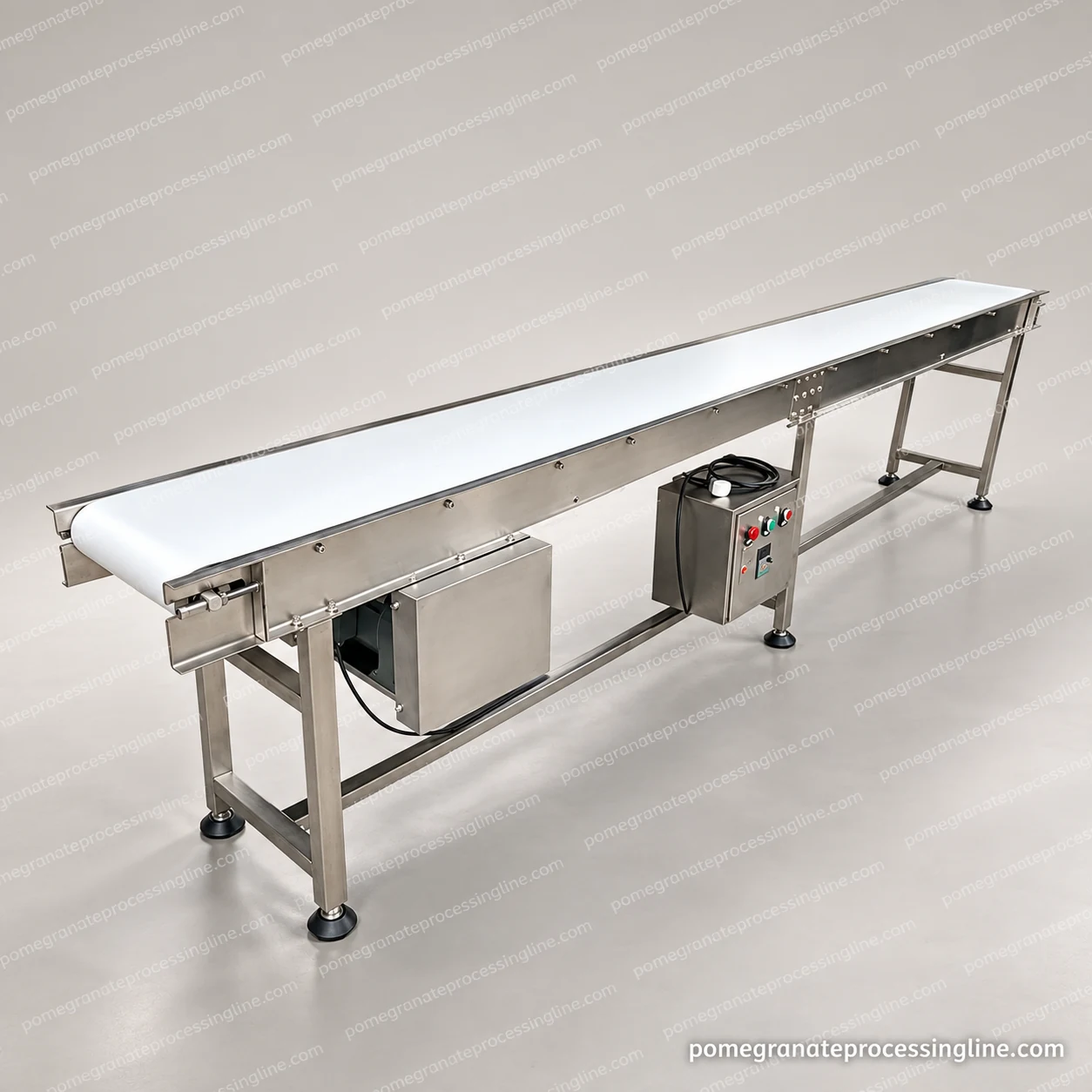
Provide enough exposed material for the inspection task
Inspection depends on how the fruit is presented, not simply on how much the belt can carry. A shallow, distributed feed gives operators a clearer view than a pile moving through the same working length.
Belt width and work height determine reach; speed and operator positions determine the available handling time. Rejection points should be usable without carrying rejected fruit across the accepted stream.
Choose the contact surface for the material being moved
The flat conveyor uses a continuous contact surface, while the second construction view shows a linked modular belt with sidewalls and a spray section. The belt structures have different joints, drainage behaviour and cleaning access.
Those differences matter when planning a transfer after fruit opening. An arrangement for loose arils must retain the smallest accepted material and manage released juice at gaps and transitions. A general modular-belt construction view does not establish that separate duty.
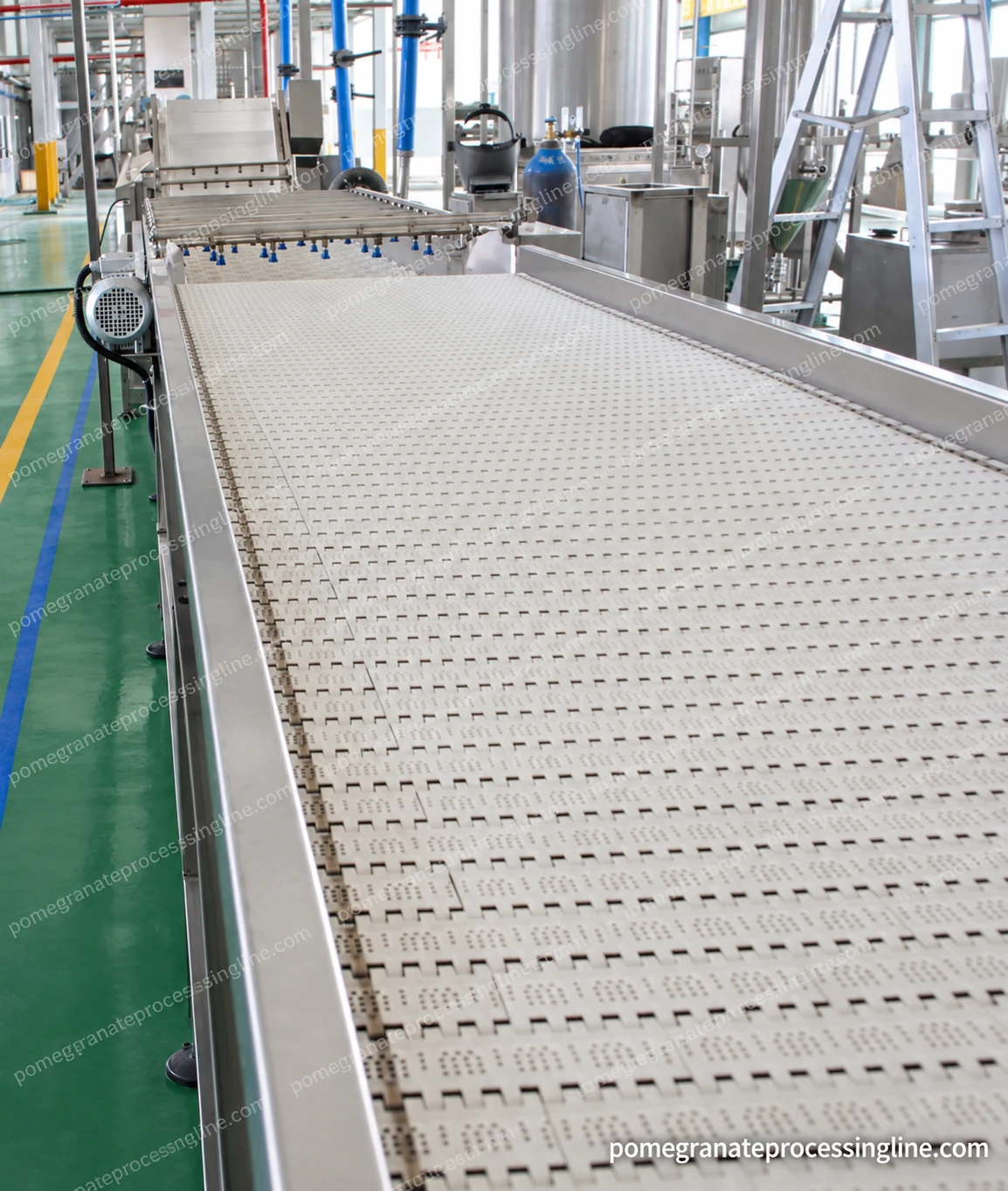
Include the work area in the equipment layout
| Element | Purpose |
|---|---|
| Working edge | Clear sight and reach without obstructed standing space |
| Rejection point | Removal of unsuitable material through a separate route |
| End transfer | Controlled movement to the next preparation step |
| Stops and guards | Accessible controls and protection around moving parts |
| Lower frame | Cleaning access and space for collection or drainage |
Inspect the belt edges and end transitions during cleaning
Wet fruit residues can accumulate beneath rails and around end rollers. Include those locations in the cleaning procedure and allow access to the belt return after safe isolation.
Routine service includes belt tracking, drive condition and the integrity of guards. Visual sorting supports the preparation process, while checks for hazards that cannot be seen remain part of the plant quality system.
Further detail
Questions about this equipment and process
Is automatic defect recognition included?
This equipment presents material for manual inspection. An optical recognition or rejection system would be a separately specified machine and control scope.