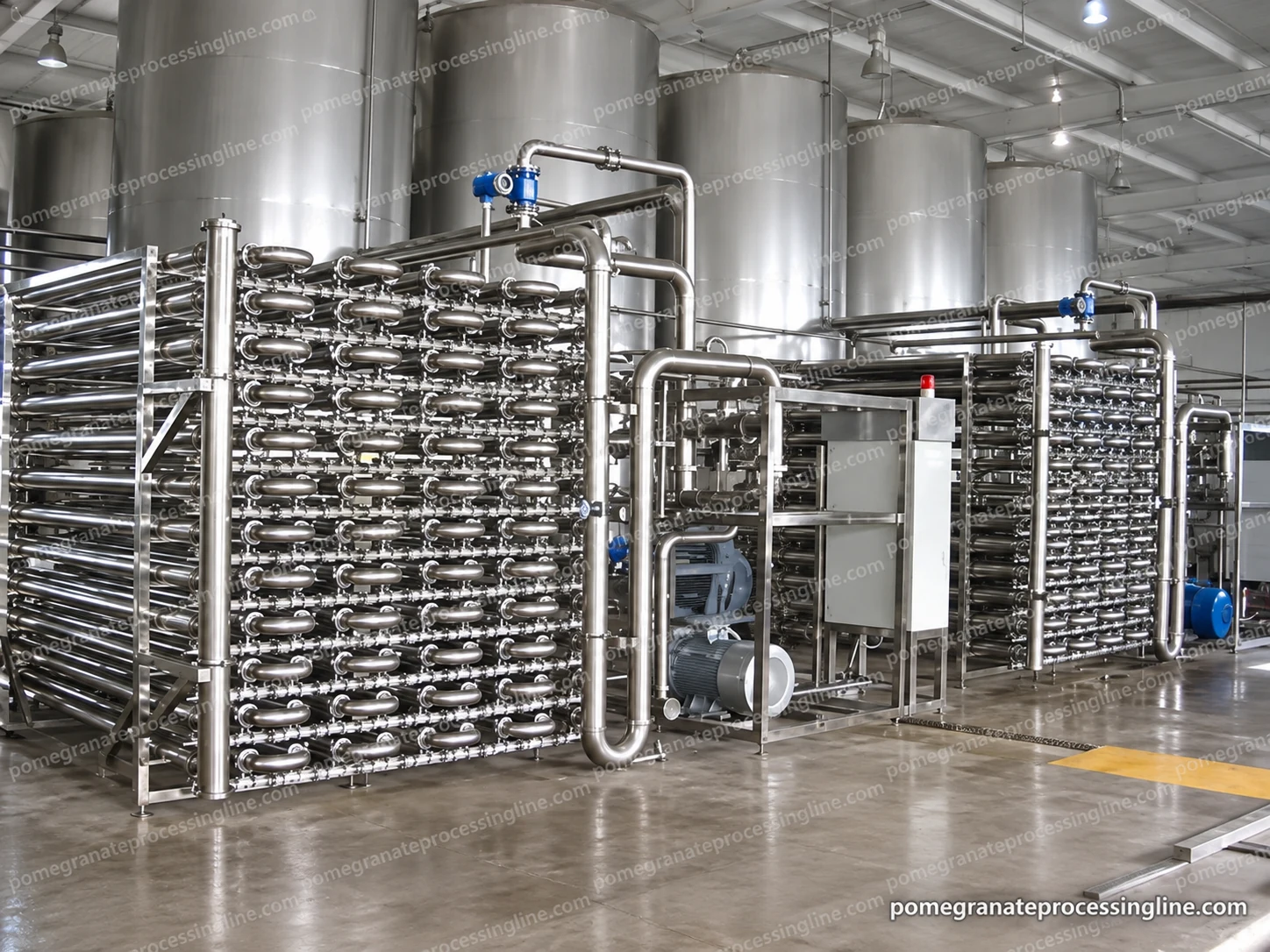
Three machines solve different separation problems
These are selectable routes, not a requirement to install all three machines in sequence. The appropriate combination follows the juice composition and the buyer’s appearance and stability specification.
| Equipment | Working task | Selection consequence |
|---|---|---|
| Disc clarifier | Centrifugal removal of sedimentable fine solids | Feed condition and discharge behaviour determine the useful operating duty |
| Filter-aid unit | Liquid passes through a prepared filter layer | Filter-aid use, retained solids and spent-material handling join the product balance |
| Tubular ultrafiltration | Liquid circulates through membrane modules and separates into permeate and retained material | Permeate quality, flux decline, retained volume and cleaning recovery are assessed together |
Prepare the feed for the selected separation
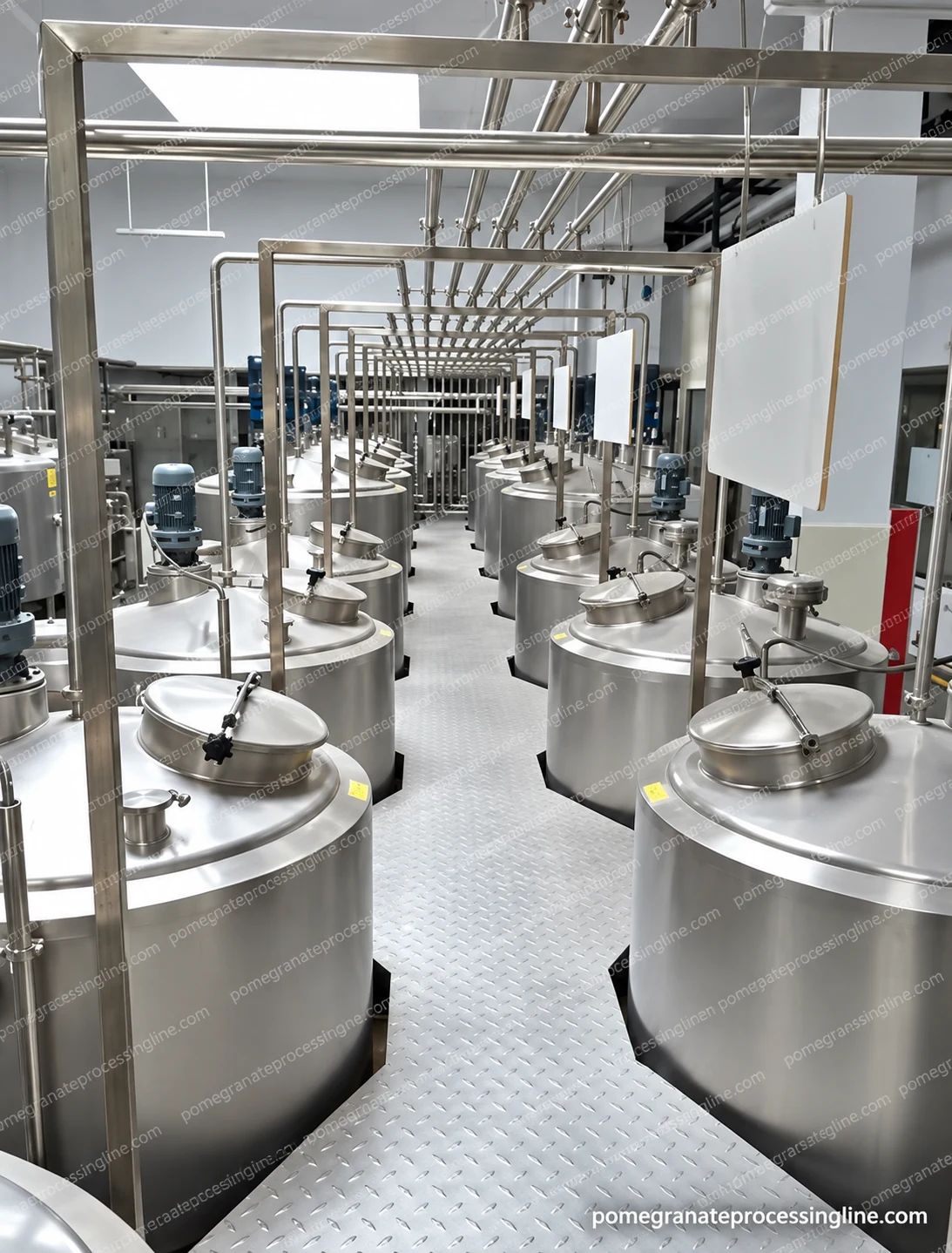
Large pieces and erratic solids loading should be managed before fine separation. Pectin-related behaviour can influence viscosity and filterability; where treatment is appropriate, a process tank supplies the mixing and temperature-control environment for that step.
Enzyme choice, dosage and residence conditions follow product trials and the enzyme supplier’s instructions. A successful treatment is judged by the subsequent separation response and finished juice, not by holding every pomegranate juice at the same temperature for the same period.
Track colour, retained product and exposure to air
Compare colour measurements at a consistent dilution, temperature and sampling method. A clear sample and a cloudy sample scatter light differently, so appearance alone does not isolate chemical colour change. The result must be interpreted together with the solids removed and the treatment applied.
Discharged separator solids, filter hold-up and membrane concentrate can all carry juice. Include those streams in the recovery assessment rather than counting only the clear outlet. Closed transfers and appropriate tank residence reduce avoidable air exposure between operations.
Judge the route across production and cleaning
A separation run should record changing flow, product condition and the operating pressure or discharge events relevant to that machine. For membrane equipment, an initially strong permeate flow is only one part of the result; the run length and recovery after the specified cleaning sequence matter too.
Cleaning must respect the membrane, seals and other product-contact components. A shared CIP station can support a designed circuit, but a common chemical programme is not automatically suitable for a filter, separator and thermal skid alike.