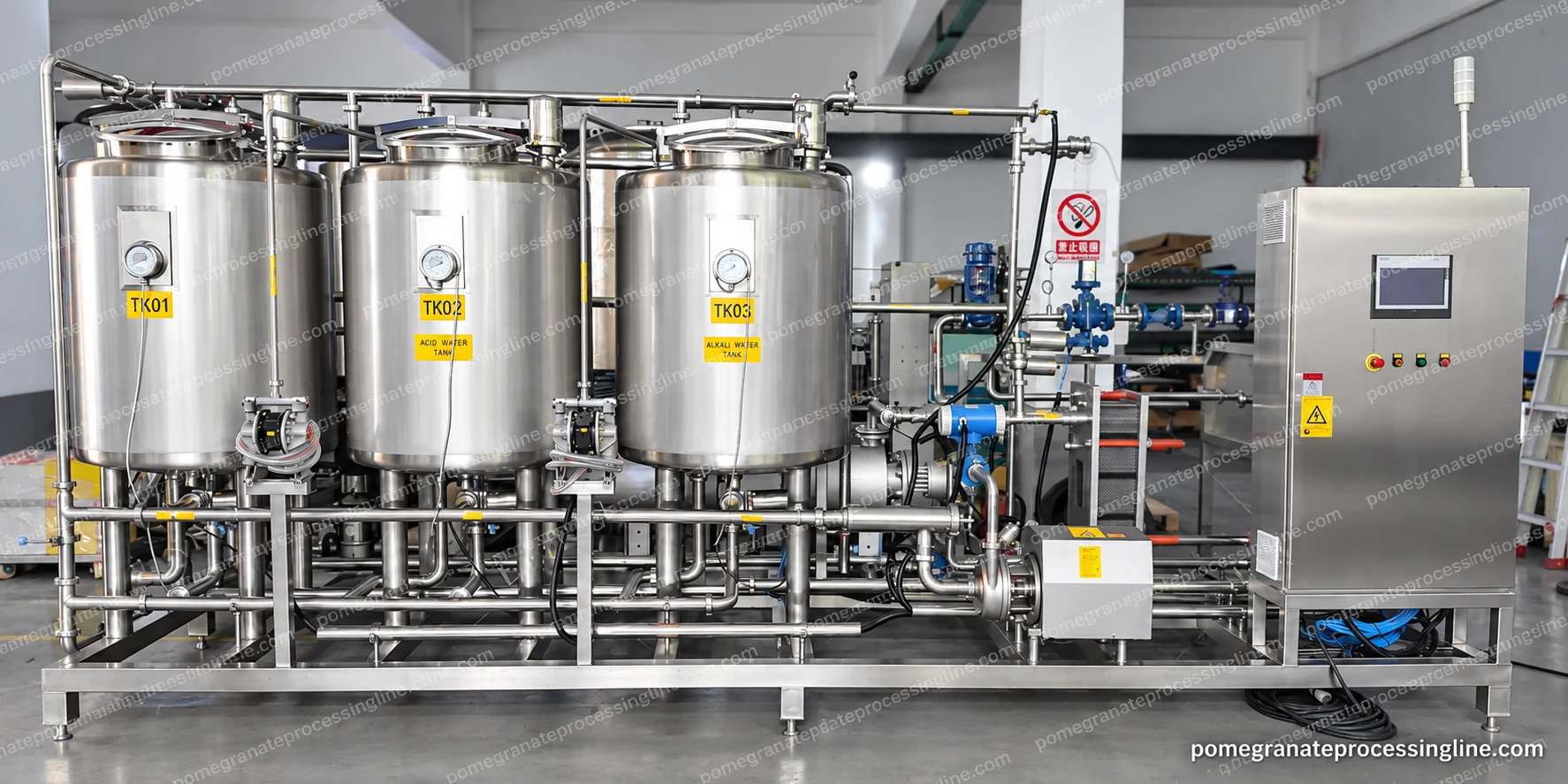
Control the fluid sent out and the return received
The pump sends the selected cleaning fluid through the connected route. Return valves direct it to the appropriate collection, recovery or discharge destination. The sequence must account for both fluid condition and the equipment path being cleaned.
Water, alkali, acid and recovery describe possible functions in a cleaning system. Their allocation is selected with the process and does not mean every station contains four physical tanks. The shown arrangement has three vessels.
Separate duties that require different limits
| Circuit | Cleaning considerations |
|---|---|
| Juice vessels and transfer | Pulp deposits, drainage and branches around valves |
| Evaporation and thermal treatment | Heated deposits and delivery through heat-transfer surfaces |
| Tubular membranes | Compatible chemicals, temperature and pressure limits |
| Aseptic filling route | Cleaning plus the separately defined sterile-preparation procedure |
| Filter-aid equipment | Spent-media removal and access to the selected internal supports |
Observe the cleaning circuit, not only the station
Fluid temperature, chemistry, flow and duration influence cleaning together. Measurement points and return checks need to reflect the route that is actually receiving the fluid, including its most demanding equipment and connecting pipes.
Steam or electric heating can be selected for the supply duty. The utility schedule should include heating, water, electrical demand and the intended wastewater route, with chemical handling and access around the station.
Keep open preparation and belt cleaning in the operating plan
Fruit conveyors, brushes, press belts, rollers and juice-collection surfaces need direct cleaning and inspection. Their access and residue-removal procedures remain necessary even when the liquid-processing equipment uses automatic CIP.
During acceptance, check the configured valve sequence, isolation, return behaviour and agreed cleaning result. A recipe chosen for one circuit should not be applied unchanged to a membrane or filling head with different limits.
Further detail
Questions about this equipment and process
Does a CIP connection establish that every surface is cleaned?
The complete route, delivery conditions, drainage and inspection or verification method determine cleaning coverage. A connection alone does not establish the result at every branch and internal surface.