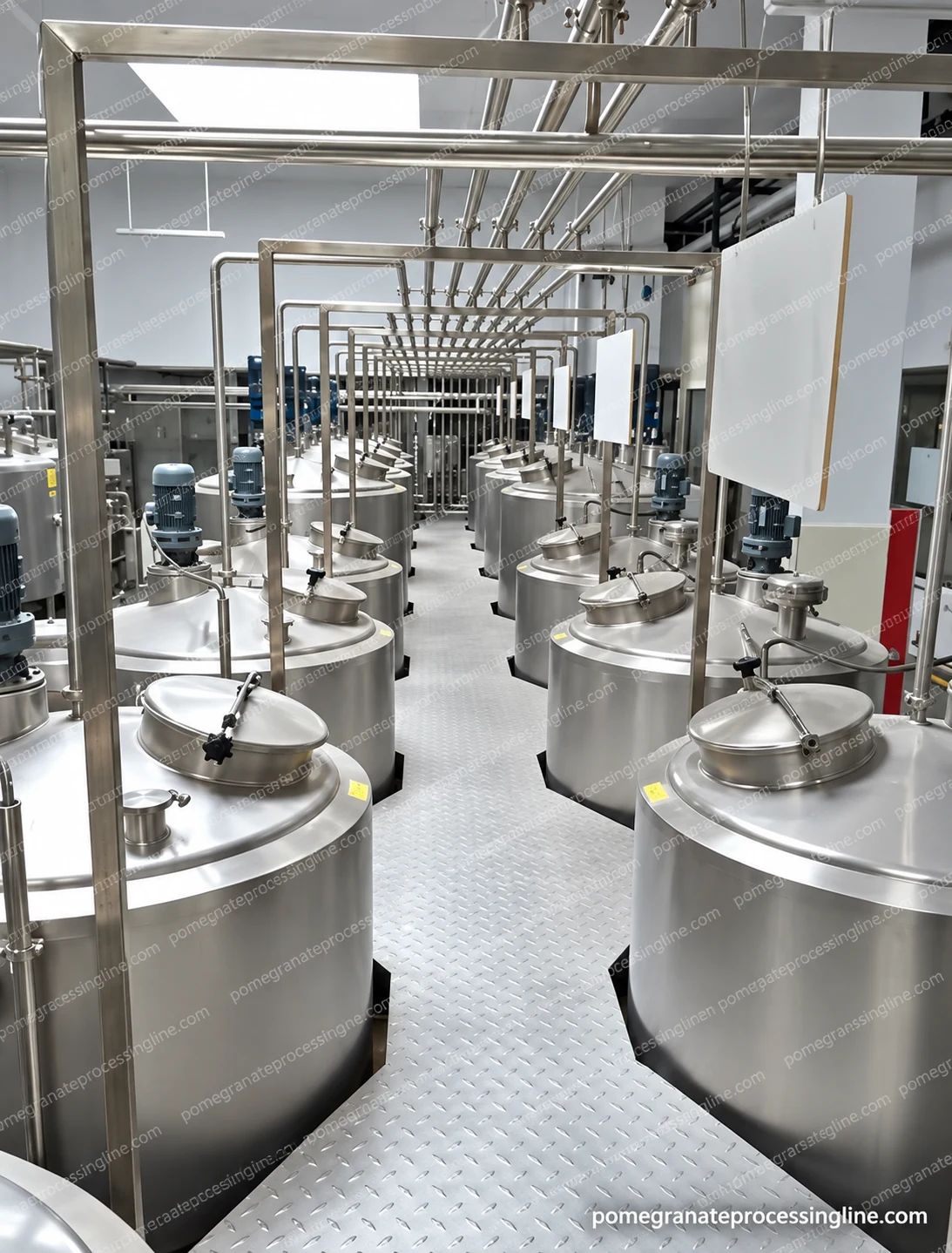
Use working volume to cover a defined flow difference
Juice leaving extraction can arrive unevenly while the next operation needs a steadier supply. The available level range provides inventory to cover a temporary difference, with level signals coordinating inlet and outlet equipment.
Gross vessel volume includes space that is not necessarily available for production buffering. Choose the usable volume with the expected interruption or surge duration, while accounting for residence time and the amount of product remaining during changeover.
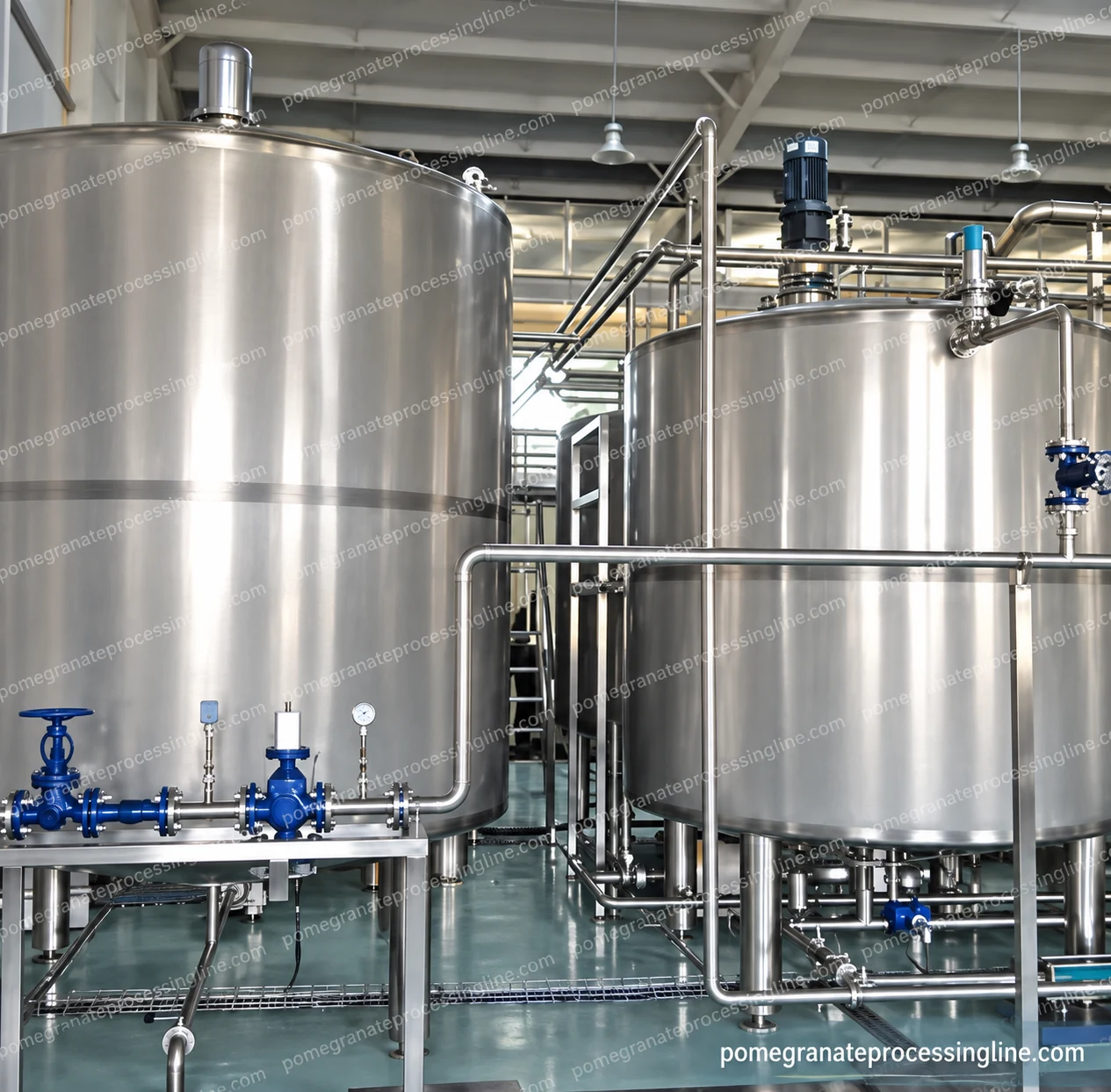
Configure agitation around the liquid operation
The process-vessel arrangement has top-mounted drives and accessible covers. The agitation duty is selected around the juice properties and the required uniformity, with attention to unnecessary air entrainment.
Where enzyme treatment is part of a chosen clarification route, the tank forms a controlled process step with its own temperature, mixing and time requirements. Those conditions follow the actual juice and treatment method; they are not a universal instruction for every pomegranate product.
Specify the outlet and pump as a connected duty
| Liquid condition | Effect on the arrangement |
|---|---|
| Juice flow and viscosity | Pump selection at the relevant operating temperature |
| Suspended material | Passage size and acceptable product handling |
| Vessel level | Available suction conditions and low-level protection |
| Receiving pressure | Required transfer pressure and pipe sizing |
| Air exposure | Inlet position, agitation and management of free falls |
| Cleaning | Drainability, branches and supply/return connections |
Make routine drainage and inspection practical
Outlets, valves, covers and instruments need accessible working space after pipe installation. Include the vessel and its transfer circuit in the cleaning plan rather than stopping the route at the tank connection.
An ordinary holding vessel is not an aseptic buffer. If sterile storage is required between treatment and filling, its boundary, preparation and controls need a specifically suitable system.
Further detail
Questions about this equipment and process
Can a tank be sized directly from whole-fruit intake?
Use the liquid arriving at that tank and the required operating inventory. Preparation and extraction change the material flow before it reaches the vessel.