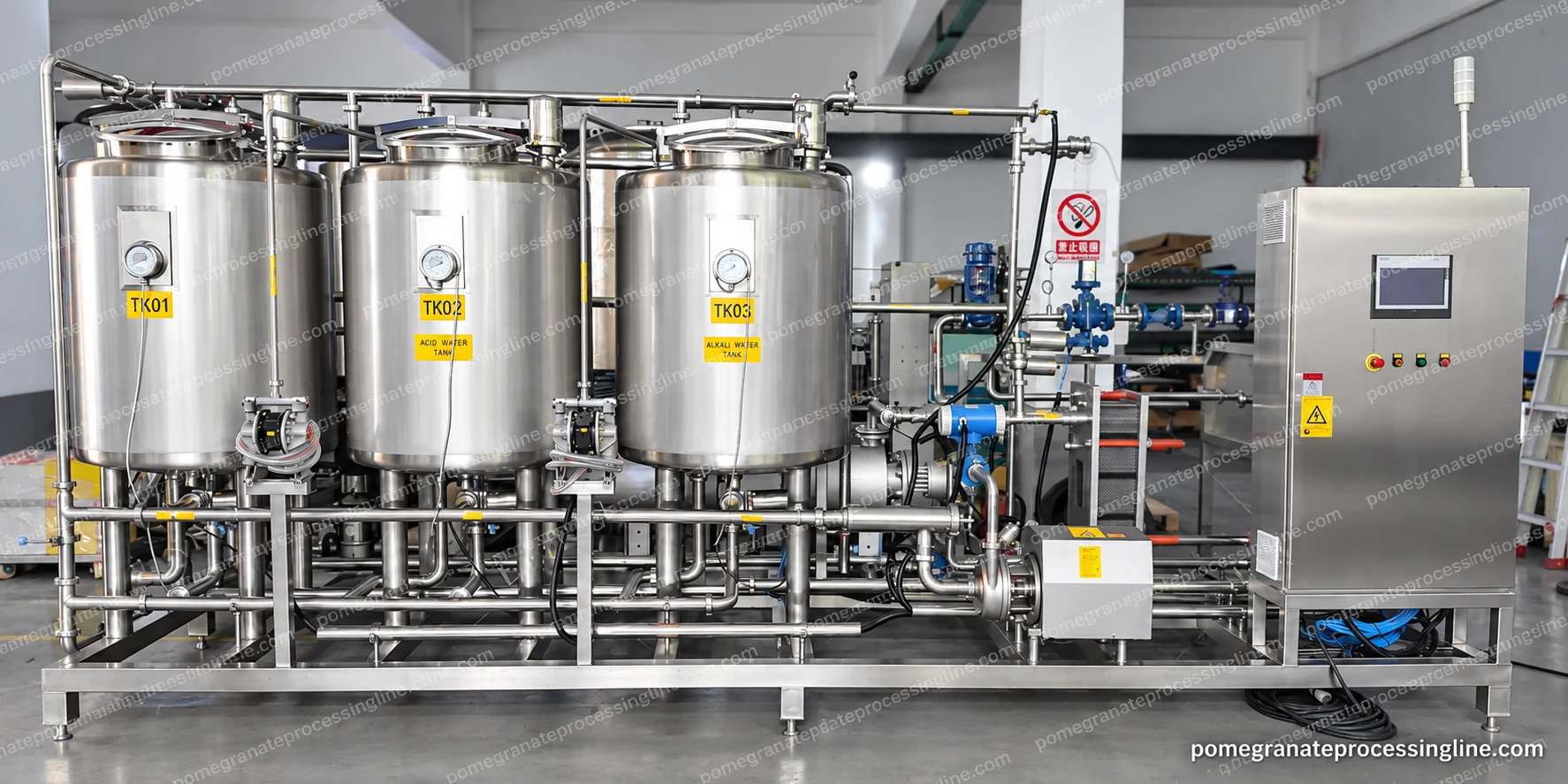
Preparation and press belts need physical access
Whole-fruit conveyors, brush rolls, preparation containers and the press receive peel fragments, seeds and wet solids. Cleaning includes removing accumulated material, reaching the underside and return path of belts, draining collection areas and inspecting surfaces that are hidden during production.
Belt washing sprays support the press’s cleaning operation, but they do not establish that every roller, frame surface and residue outlet is clean. Machine isolation and the specified access procedure are required before clearing trapped solids, opening guards or servicing drives and tensioning components.
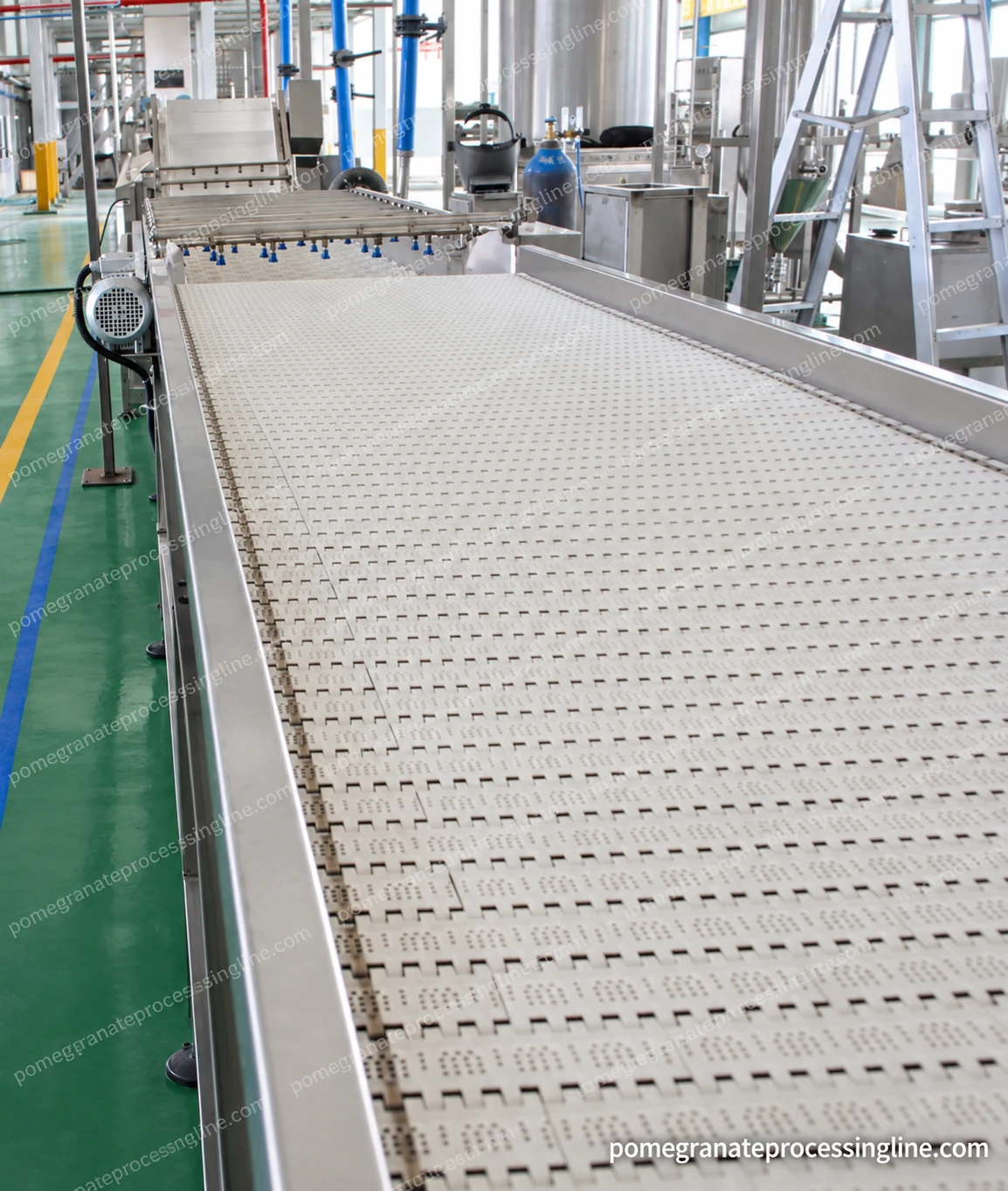
CIP depends on a complete supply-and-return path
The CIP station circulates the selected cleaning medium through a defined circuit and returns it for recovery or discharge. Tank devices, pipe routing, valve positions and drainage must let the medium contact the surfaces that carried product. Flow and return conditions establish what the installed circuit is receiving.
Tanks, thermal equipment and filling connections can require separate circuits or operating sequences. The longest or most restrictive path may determine pump duty; simultaneous cleaning introduces another load. Tank count by itself does not describe how many circuits can be cleaned effectively.
Filters and separators have their own cleaning limits
A filter-aid system includes management of the spent filter layer and retained solids. A disc separator needs its prescribed discharge and inspection procedures. Tubular ultrafiltration requires a cleaning sequence compatible with the membrane and seals, followed by a useful measure of restored performance.
These duties should not inherit a thermal-skid cleaning recipe by default. Product composition, deposits and materials determine the appropriate chemical conditions. Cleaning records should show the conditions achieved at the relevant circuit, rather than only the settings at the station.
Use cleaning access to support routine inspection
Routine checks can cover belt tracking and damage, brush condition, pump seals, valve leakage, drainability and instrument condition. On evaporation equipment, changes in production duty and cleaning response help identify deterioration that a visual exterior check would miss.
The maintenance package should identify serviceable parts, consumables and the isolation method for each supplied machine. Cleaning verification and maintenance inspection are related activities, but one does not replace the other: a functioning drive says nothing about residual product in an inaccessible pocket.