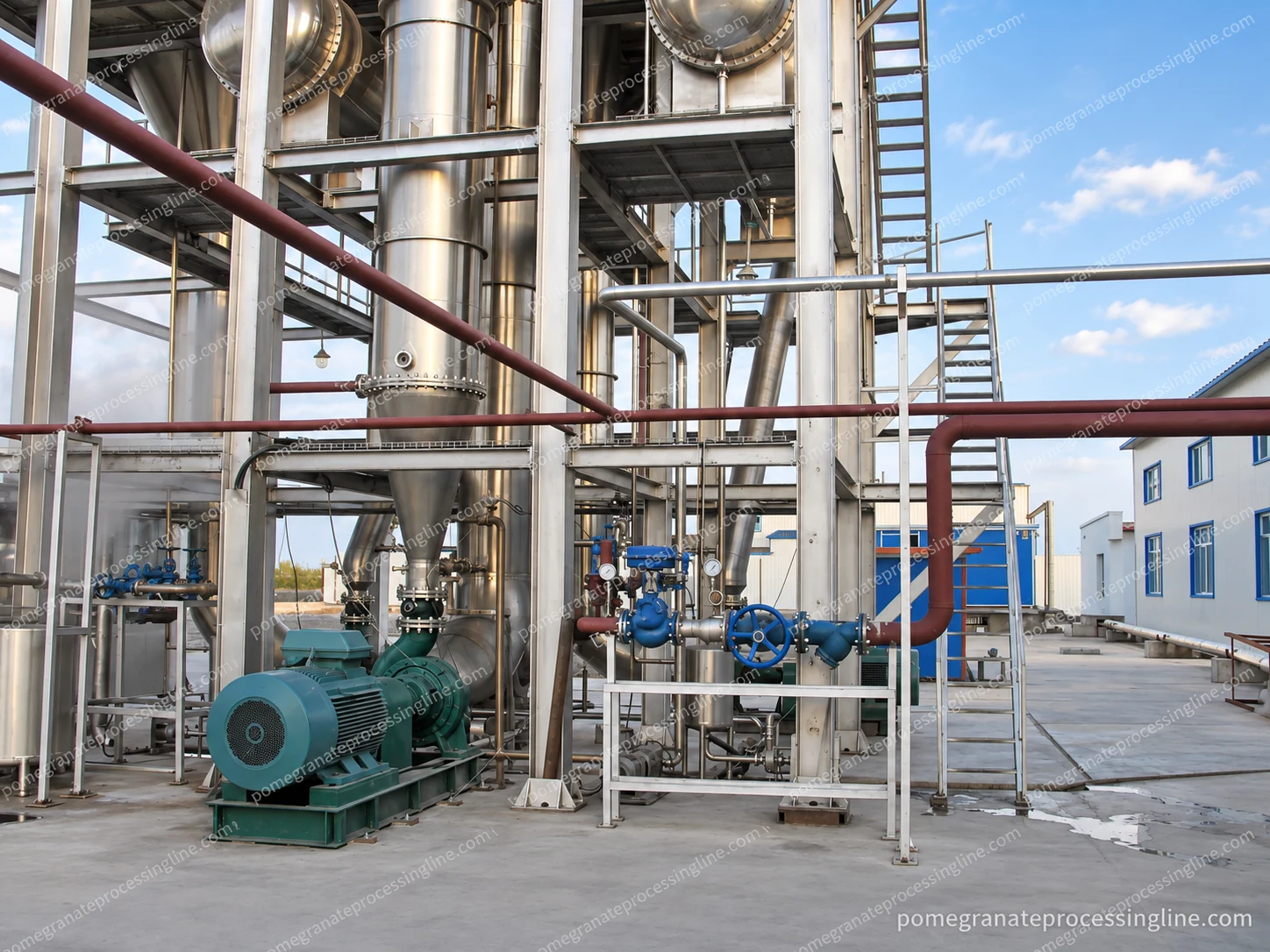
Connect the specification to the buyer’s application
A clear beverage ingredient, a cloudy juice base and a blended formulation may need different clarification before evaporation. Removing additional solids changes the product as well as the load on the evaporator. The chosen route should therefore follow the intended ingredient use.
Product evaluation can include reconstitution to a defined condition so colour, sediment and sensory results are comparable. Record the analytical method and temperature for concentration measurements. An isolated reading from warm concentrate does not establish the complete finished-product specification.
Follow viscosity, heat exposure and deposits
Vacuum evaporation lowers the boiling temperature relative to the same liquid at atmospheric pressure. Product temperature still depends on the operating pressure and liquid composition, while residence and recirculation influence the overall heat exposure.
A falling-film or forced-circulation arrangement is selected for the liquid’s behaviour across the required concentration range. Distribution, circulation and deposit formation affect useful operating time between cleaning events. The system specification includes the starting juice and final concentrate, not just a maximum water-removal figure.
Treat aroma and air removal as connected duties
Juice transfers can introduce air, and vacuum operations can remove volatile compounds along with gases or vapour. Tank residence, inlet arrangement, deaeration and the evaporation path therefore influence the same quality objective from different directions.
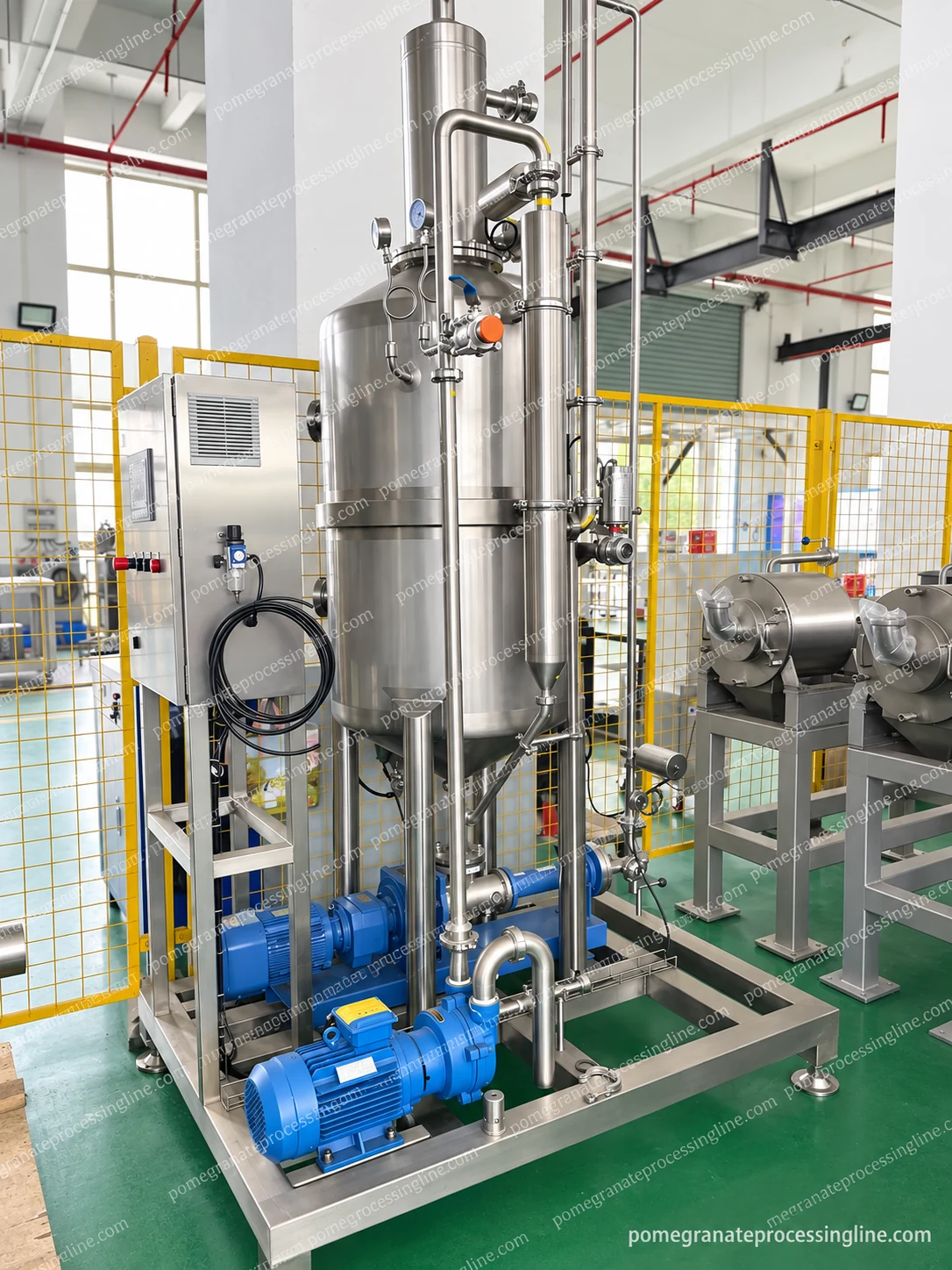
A vacuum deaerator provides a dedicated chamber and gas-removal arrangement where the process calls for it. Condensing equipment belongs in the vapour handling design, but its presence alone does not establish an aroma-recovery percentage. Compare the ingredient’s sensory result across the selected route.
Keep the thermal and package specifications together
Concentrate transfer, thermal treatment and bag filling are configured for the final liquid condition. The selected bag fitment, valve opening and metering arrangement must suit the product. Container access and filled-pack movement also affect the usable filling cycle.
Shelf-life acceptance belongs to the validated product, thermal process, sterile interface, package integrity and storage conditions. It cannot be derived from the presence of an aseptic filling head alone. A production trial should include samples from the final package as well as the evaporator outlet.